
When the famous Australian summer months come rolling in, it is hard to remember the colder nights of winter. This is particularly true in rural areas and specific climates of the country, where summer sunburns eventually turn to fresh frost on the ground.
Keeping your home at an optimal temperature all year-round can be quite a challenge with these seasonal disparities. However, your comfort can be secured through an air conditioning system with both heating and cooling properties.
Reverse cycle air conditioners operate as a heating and cooling system suitable for any home. If you are interested in learning more about this air conditioner, how it works and the benefits it can offer your household, we have the answers for you!
What is Reverse Cycle Air Conditioning?
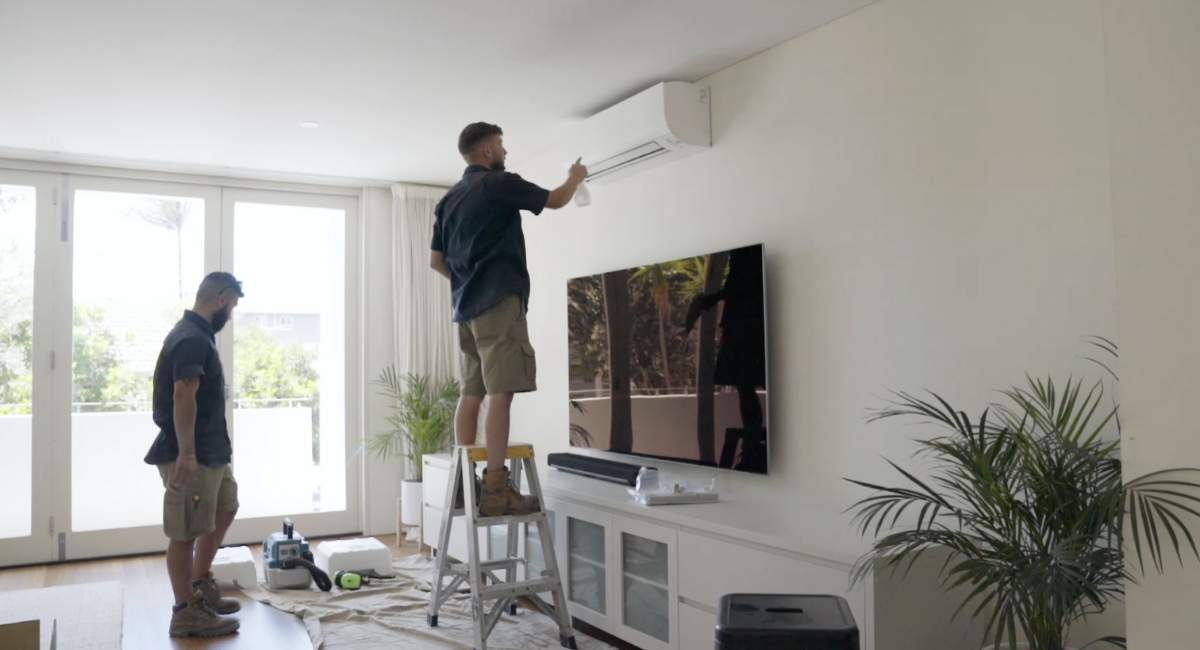
Many air conditioning units are designed solely with cooling functions, keeping your home refreshing during the hot Australian summer. However, when the colder months approach, some Australians may find themselves wanting an additional heating mode on their AC.
Reverse cycle air conditioners provide this combined heating and cooling efforts in one energy-efficient unit. Also known as ‘heat pump technology’, a reverse cycle air conditioner extracts heat from outdoor air to create warmth indoors. In a similar motion, it can also cool the indoors by extracting heat from any household rooms.
Common Features of a Reverse Cycle AC
Whether you are installing a new air conditioner or looking to replace an old one, there may be some features of a reverse cycle air conditioner that are unfamiliar to you. Being aware of the following features can allow you to make the most of your system and ensure the household is always comfortable:
- The Dry Mode allows you to dehumidify rooms, preventing mould growth and supporting inhabitants’ wellbeing
- Indoor air can also be purified from airborne pollutants, dust, and other irritants, a particularly helpful feature for those with allergies or sensitivity
- Match your indoor climate to specific stages of your nightly sleep cycle with Sleep Mode
- Keep the temperature optimal at all times without additional work through Automatic Mode
- Save money and lessen energy consumption through the Economic Mode
How Does Reverse Cycle Air Conditioning Work?
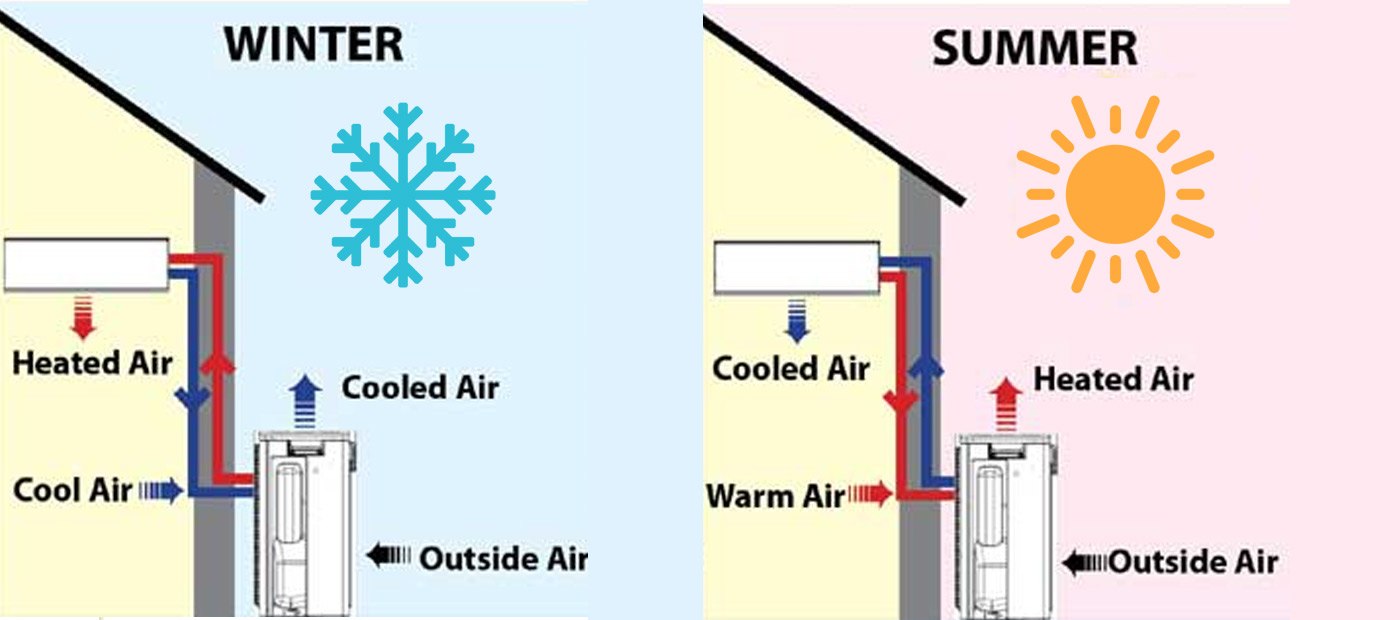
At its core, reverse cycle systems work by absorbing heat either indoors or outside, and transferring this collective warmth to the opposite environment.
To provide cool air indoors, the reverse cycle system will absorb heat from targeted rooms and expel it outside. The heat exchange process works in ‘reverse’ for warming your home up, absorbing heat from the outside air and bringing it indoors.
Of course, the actual mechanics to perform heat exchanger functions are more complex. Regular maintenance is often required to ensure that components such as the refrigerant, evaporator, condenser and reversing valve all perform their role in heating and cooling operations.
Heating Function
Refrigerant is the substance within air conditioners that allows for the heating and cooling modes to operate. This is because the substance facilitates the transfer of heat between one area to the other, often done in liquid or gas form.
To heat a home, the process begins with liquid refrigerant and goes as such:
- The liquid refrigerant travels through the external coil of a reverse cycle air conditioner
- The heat from outdoor air is then absorbed by the refrigerant
- The liquid is then transformed into a refrigerant gas by being superheated in the compressor feature
- Once the gas passes through an evaporator coil, it releases the heat energy
- An internal system fan will then push out the created hot air out of an indoor unit to be circulated throughout the home
After each cycle, the refrigerant gas is then cooled down to return to liquid form. This allows it to be reused for the next heating cycle until the room(s) are heated to the desired temperature.
Cooling Function
When warm air from your home is extracted by a reverse cycle air conditioner, it goes through a cooling process controlled by the system’s refrigerant. The direction of the refrigerant flow is opposite to the reverse cycle heating mode.
This cooling process is summarised as:
- Warm air is pulled from the house with an indoor unit
- High-pressure liquid refrigerant is pushed through the system
- The liquid is converted into a refrigerant gas
- The gas is pushed through the evaporator coil to absorb the collected warm air
- The air is cooled and then expelled back into the home by the system’s fans
- Leftover refrigerant gas goes through a compressor in the system and superheated
- The heat energy is then expelled outside via another fan and the heat exchanger
Finally, the refrigerant gas is cooled back into its original liquid form. This allows the refrigeration cycle to begin once more as needed to cool the home further.
Benefits of Reverse Cycle Air Conditioning in the Home
Why choose a reverse cycle air conditioner over the other available systems in the HVAC range? There are many reasons why more Australians are turning to reverse air conditioning systems over the alternatives.
Consider the following benefits to help you determine if a reverse cycle air conditioning unit is the right choice for your home and its needs:
Complete Climate Control
The presence of heating and cooling systems in a singular air conditioner grants you complete climate control in every applicable room.
With a range of AC features, a reverse cycle air conditioner can not only set a precise room temperature, but also remove humidity and purify the air. This means that not only are you at an optimal temperature, but so is the air quality. So, even residents with airborne allergens can comfortably rest at home without any concerns.
Additionally, reverse cycle air conditioners are reliable systems that can heat an entire building with just one energy-efficient unit.
Energy-Efficiency
Unlike most other air conditioners, reverse cycle technology utilises preexisting warm and cool air to help produce the ideal temperature indoors. Since the system can actively absorb heat, it has the ability to transfer a 3:1 ratio of heat to electricity units during operation.
This makes reverse cycle air conditioners incredibly cost-effective, especially in the long term. However, such efficient heating and cooling is only possible when the AC system is kept in optimal shape. This may require regularly scheduling professional HVAC servicing from a trusted provider.
Cost-Effectiveness
Since the system is already so energy-efficient, it is understandable how reverse cycle air conditioners are widely recognised to keep operation costs down. In fact, compared to many modern systems, reverse cycle technology is one of the most cost-effective options in the current Australian market.
By consuming less energy with the same air flow output, you can keep your annual heating and cooling costs down with a reverse cycle air conditioner.
Environmentally Friendly
On top of using less energy, reverse cycle ACs also have lower greenhouse gas emissions than many other HVAC systems. This is because less electricity needs to be used in their refrigerant cycles, while the heating exchange provides a more efficient operation.
Versatility
With the wide range of air conditioning system features available in a reverse cycle unit, it can adapt to any home and its occupants’ needs. However, even with the notable benefits of air purification or dehumidification, reverse ACs’ basic functions are already versatile.
While many ACs only offer a cooling mode, reverse cycle ACs also provide heating. Furthermore, the use of inverter technology in the system installed means that power is adjusted slowly to reach the desired temperature. This means that less energy is used, but also that there are no fluctuations in the air flow or its temperature.
Air Purification Filters
Reverse cycle air conditioners can come with the remarkable feature of air-purifying filters. When installed, these filters catch airborne pollutants such as dust, dander, odour, bad bacteria, and pollen, amongst other common allergens. With their active removal, your home’s environment can be successfully purified.
For those with allergies, asthma or hay fever, this feature can be crucial to both health and comfort at home.
Quiet Operation
Once turned on, you may forget about your reverse cycle air conditioner altogether with the lack of noise it emits. Designed to provide quiet operation, you and the whole family can enjoy daily life without interruption.
However, if you do notice any unexpected noises from your air conditioner, it is best to immediately contact a HVAC provider. They will have the expertise and experience to assess the condition of your AC and provide repairs if needed right away.
Split System vs Ducted Reverse Cycle Air Conditioning: What’s the Difference?
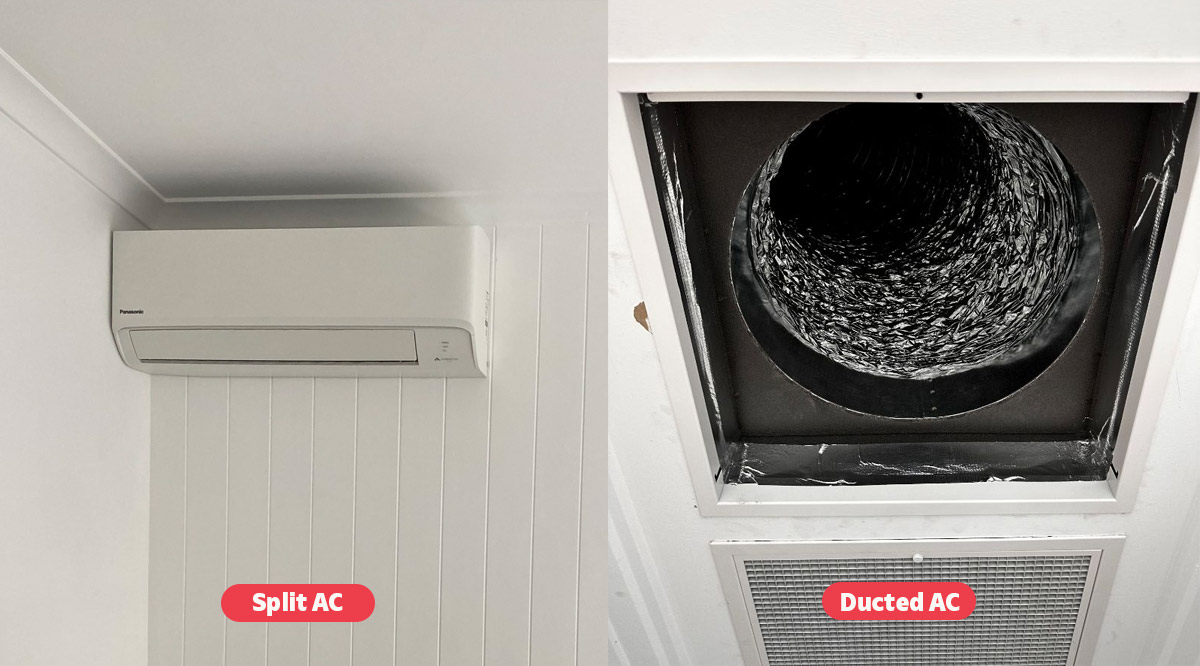
When considering whether to buy a reverse cycle air conditioner, you may encounter split system and ducted system products. Both are uniquely designed AC systems that suit particular building structures, occupant needs and desired climate control features.
So, to determine which is better for your home, it is important to first understand the difference.
What is a Split System Air Conditioner?
Split system air conditioners provide temperature control to a home through an indoor and outdoor unit. Hence, the use of ‘split’.
By having two units in a system, split ACs can successfully extract hot air from a home through the outdoor unit and cool the inside with the indoor unit. Multiple indoor units can be added to the same system to provide climate control to any home, regardless of its scale or interior design.
Reverse cycle split systems utilise this design along with the ability to reverse the traditional refrigerant cycle. Thus, making the system’s design more optimal, energy-efficient, and cost-effective through the exchange of indoor and outdoor temperatures.
What is a Ducted System Air Conditioner?
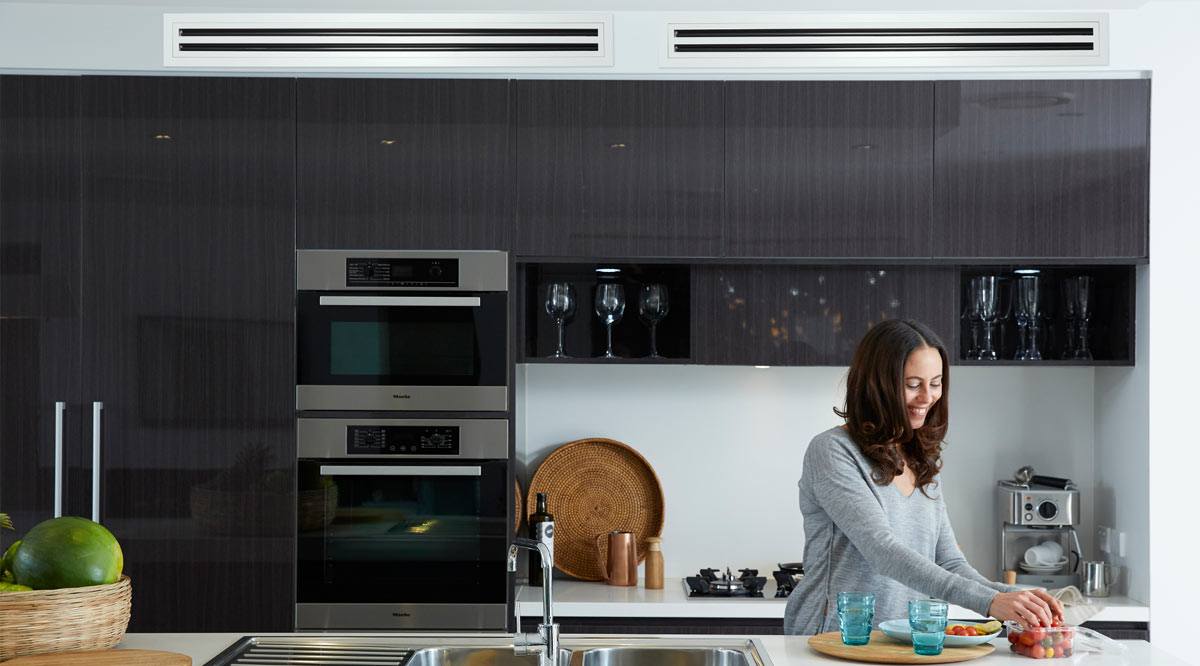
Rather than just using a visible AC unit to transmit heating and cooling air, a ducted system goes further by designing a series of vents within a home. Vents are installed into the wall, floor and/or ceiling to provide constant airflow, using the usual temperature-controlled output of the combined indoor and outdoor unit.
The scalability of ducted AC systems means that they are especially suited to larger homes, especially those with complex designs and/or multiple floors. They also often have zoning capabilities, allowing you to set independent climates in individual rooms.
Ducted reverse cycle system air conditioners ensure these large-scale operations are both cost-effective and energy-efficient. Thus, allowing you to make the most of your AC without breaking your budget.
| Split System | Ducted System | |
| Indoor Unit? | ✔️ | ✔️ |
| Outdoor Unit? | ✔️ | ✔️ |
| Zoning Capabilities? | Only with a multi-split system | ✔️ |
| Aesthetics? | Visible indoor units | Discreet vent systems |
| Installation Process? | Simple, cost-effective, and can be applied to specific rooms | Requires complex ductwork installation that can be more costly |
| Coverage? | Specified to the room the indoor unit(s) are installed | Whole-house control |
| Cost? | Cheaper installation and operating costs for singular and/or fewer rooms, but more expensive for larger homes | Expensive installation and higher operation costs overall, but more cost-effective for larger homes |
Both ducted and split systems are suitable to be adapted for reverse cycle technology. Whether one or the other is better for your home is dependent on person-to-person. However, discussing your options with an experienced air conditioning specialist can help you come to a clear decision.
Have Your Reverse Cycle Air Conditioner Installed by Local Experts
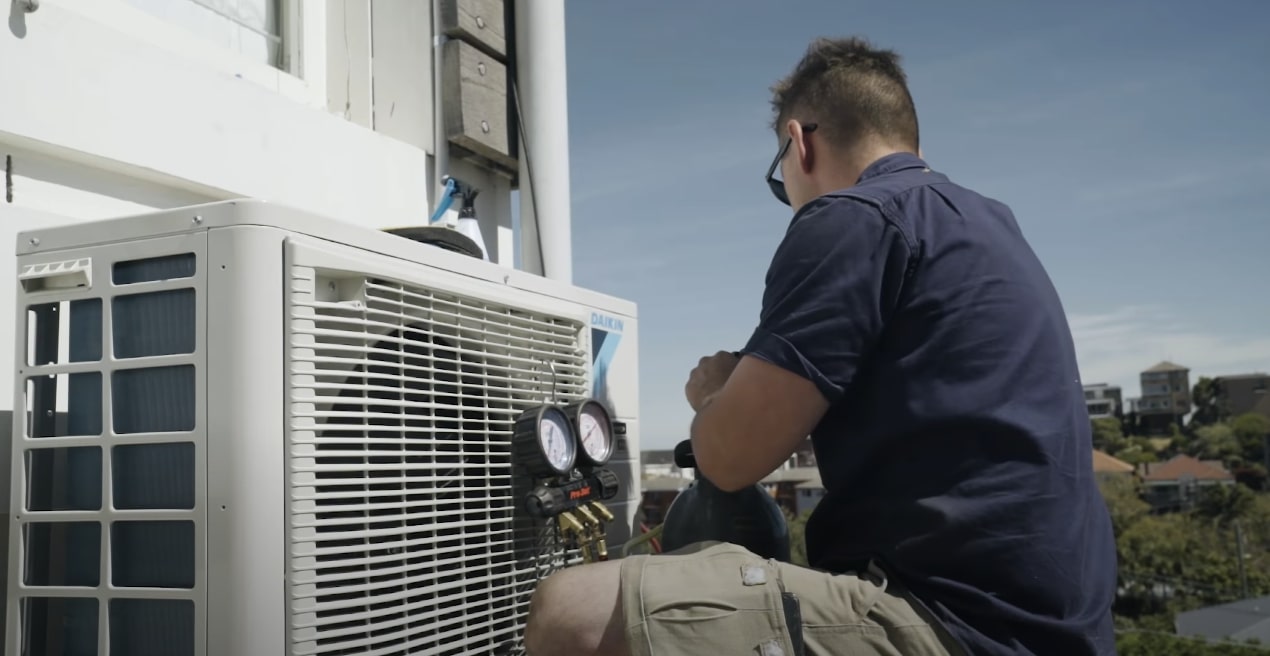
Learn more about reverse cycle air conditioners and how they can benefit your home with the locally-based AC experts. Alliance Climate Control can help guide you to the best reverse cycle product for your needs, providing in-depth explanations on its benefits and features as needed.
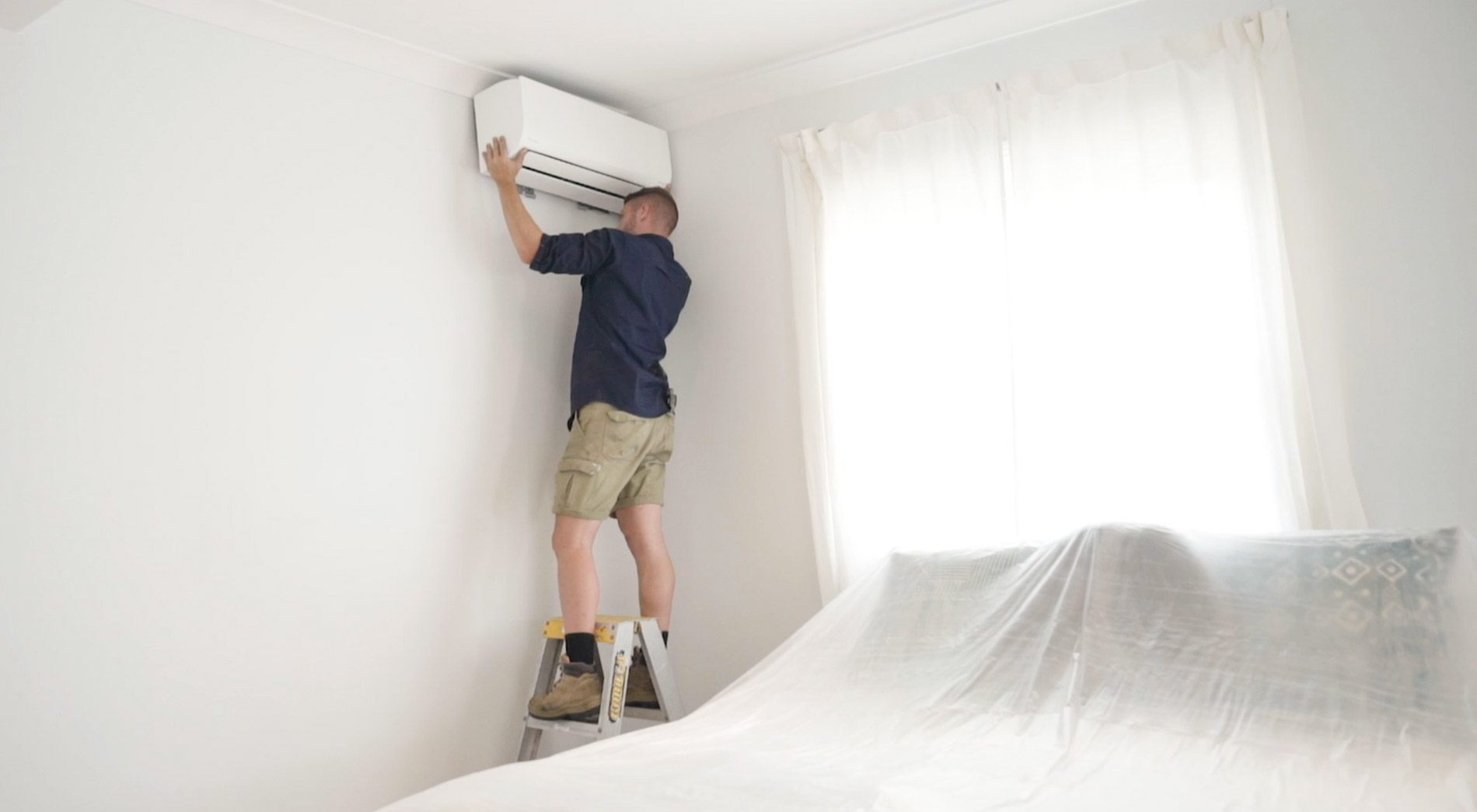
Our HVAC technicians can also efficiently install your new reverse cycle air conditioner once a decision has been made. We will handle the entire job on-site, arriving promptly and leaving your home as clean as it was when we arrived.
Further maintenance and servicing options are also available with Alliance Climate Control. If you want to talk more about your reverse cycle air conditioning options, feel free to call us at 02 8061 5023. Otherwise, you can book a free consultation online.
FAQs
How to tell if an aircon is a reverse cycle?
Generally, it is best to ask your air conditioning provider if your chosen aircon system is a reverse cycle product. However, you may also be able to determine it on your own by looking at: its energy rating label, remote control, or the unit itself.
Reverse cycle air conditioners have a zoned energy rating label on the unit, showing efficiency for both heating and cooling purposes. Hence, you will know it is capable of emitting both warmer and cooler air in your home.
Do reverse cycle air conditioners bring in outside air?
Technically, reverse cycle air conditioners do not bring in outside air to generate heating or cooling. Rather, the refrigerant transfers heat between the inside and outside to match the set temperature.
How often should I clean my reverse cycle air conditioner?
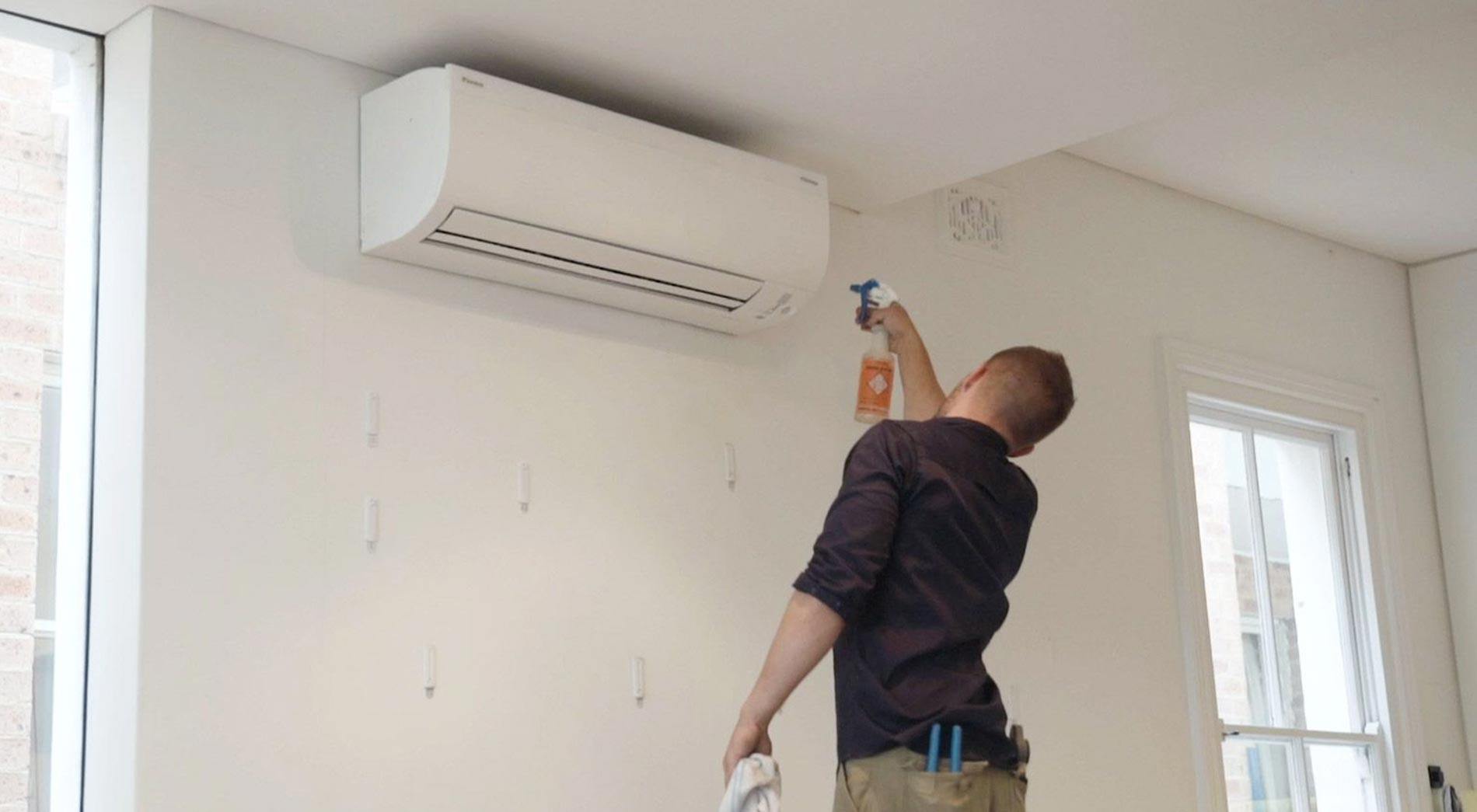
HVAC specialists advise that any air conditioner should be professionally cleaned at least once a year. Between those appointments, you should clean the aircon’s filters around once a month or when a new season starts for adaptability purposes.
If you use your AC frequently, you may have to increase the frequency of your cleaning appointments.