
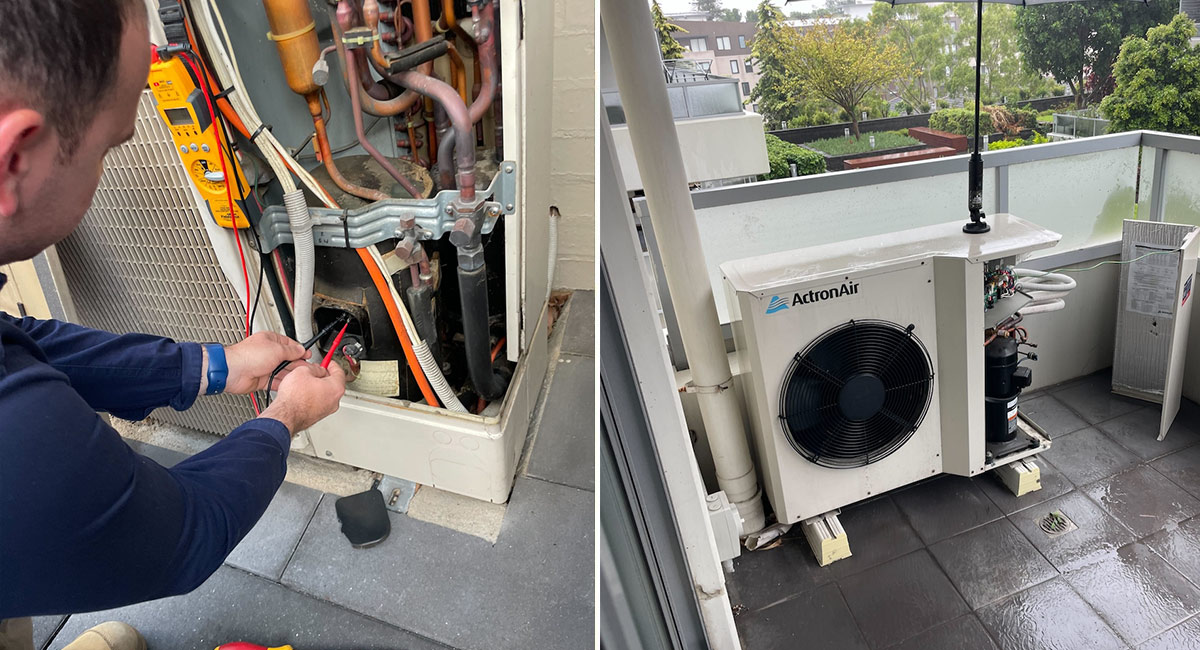
When you’re going through a scorching Australian summer, you want a quality air conditioning system that suits your needs and is ready to go. While both ducted and split system air conditioners have their advantages and disadvantages, it can be tricky to decide which is most suitable for you.
In this complete guide, we’ll explain how each system works and the biggest benefits offered by each air conditioner. That way, you know exactly which system fits your home, budget and cooling needs before you buy it.
What is Ducted Air Conditioning?

Ducted air conditioning is an HVAC system that uses ducting and vents to provide an entire property with temperature control from a single unit.
How it Works
Ducted air conditioning is typically made up of one single, centrally located air conditioning unit that is most commonly stored in a roof space. This unit heats or cools air across the property by either extracting heat using refrigerant or warming the air it distributes.
That single unit is then connected to the home using a network of vents and ducts, giving the whole residence hot or cold air as needed. Ducted air conditioning often also has a fan coil to ensure cool or hot air is pushed through the vents.
Key Features
Key features of a ducted air conditioning system include:
- Quiet operation: As the main unit is separate from the house, a ducted air conditioning system operates almost silently throughout the home.
- Advanced zoning: Generally, a ducted system comes with comprehensive zone control tools, letting you individually set the temperature of multiple rooms.
- Discreet unit housing: Unlike other air conditioning systems, a ducted system uses a single unit that is typically stored in the roof space, leaving no visible sign that the system is there.
Benefits
Some benefits a ducted air conditioner can bring to your home include:
- Whole home climate control: With a central heating and cooling unit and a wide network of ducts and vents, you have comprehensive climate control across your home, whenever and wherever you want it.
- Unobtrusive design: Design your home to the aesthetic you want without worrying about an obvious or ugly protrusion affecting your carefully designed plan.
- Year-round comfort: Find the right temperature for your home no matter the time of year, whether you’re going through a scorching summer or an ice-cold winter.
- Customisable air distribution: Most ducted systems come with thorough zoning controls, letting you choose exactly what individual temperature you would like for each room.
What is Split-System Air Conditioning?

Split system air conditioningis a wall-mounted unit that provides climate control to the immediate area it is in.
How it Works
A split system air conditioner works by cycling refrigerant between two split units, an indoor unit and an outdoor unit. This is why it is called a ‘split system’ air conditioner. The two systems are connected through copper pipes that also allow refrigerants to travel and transfer heat between them.
The indoor unit houses a fan and an evaporator coil that absorbs heat from the room and blows cool air back into the space. The outdoor unit houses a compressor that pressurises the refrigerant, which the condenser coil then releases into the air outside.
Key Features
Key features of a split system air conditioner include:
- Easy to install: A split system aircon typically just needs minor renovations to a wall for installation making it perfect for any room.
- Flexible heating and cooling: Gain comprehensive temperature control of the area it is installed in, whether you’d like to cool down a hot spot or make your living room cosier.
- Affordable installation and upkeep: With a simplified design and fewer moving components, split systems are easier to maintain and repair than other air conditioning types.
Benefits
Some benefits a split system air conditioner can bring to your home include:
- Versatile installation: As long as you have a wall and space for an outdoor unit, you can install a split system anywhere on your property.
- Energy efficiency: Modern split system units can adjust compressor speeds instead of cycling on and off, reducing total energy consumption.
- Easy maintenance: Using a split system, you don’t have to worry about cleaning ducting or double-checking complex connectors. Just clean and maintain your main unit, and you’re set.
Comparing Ducted and Split‑System Air Conditioners
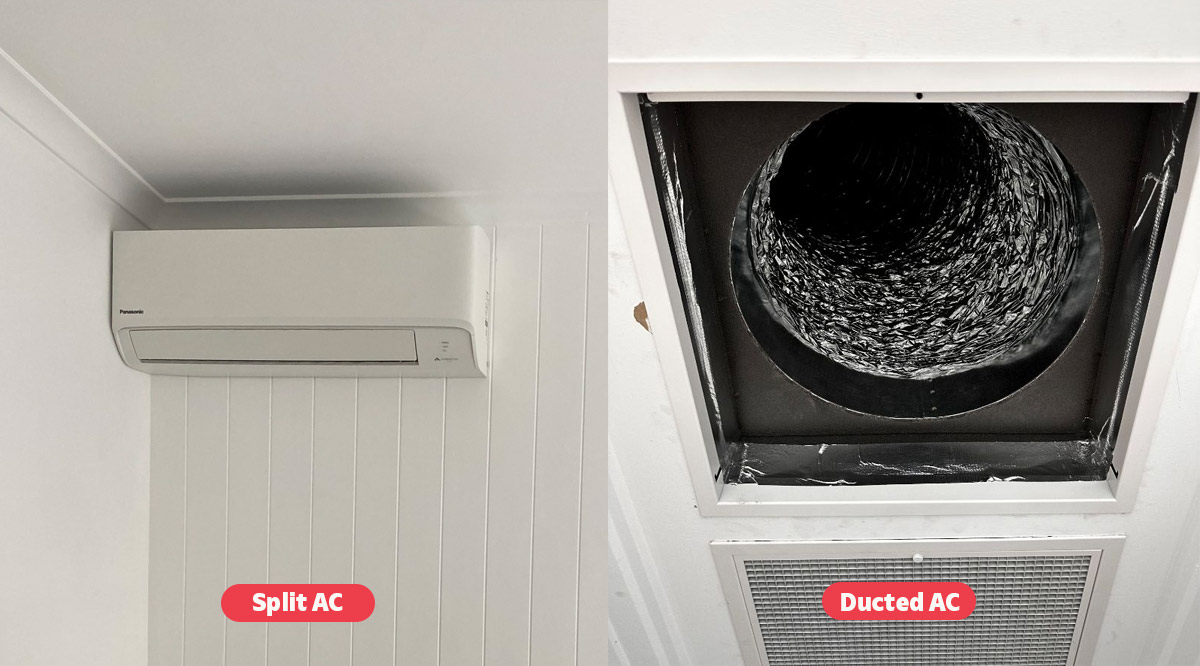
There is not a ‘better’ system for your home when it comes to split system vs ducted air conditioning. Each has its own clear benefits and drawbacks, from pricing to installation to cooling efficiency.
Here are quick comparisons of each system’s features and how they apply to you:
| Feature | Ducted Air Conditioning | Split-System Air Conditioning |
| Installation Process | Long, intricate, requires ducting or vents | Quick, simple, can be placed on any wall |
| Energy Efficiency | Efficient for large, well-zoned homes or properties | Efficient for single rooms and targeted cooling |
| Cost of Installation | $5,000-$20,000 | $1,500-$3,500 |
| Aesthetic | Discreet and well hidden, no specific aesthetic | Depends on the model, but the device is always visible through a wall-mounted unit |
| Coverage Area | Any room or area within the installed ducts | A single area or room |
| Flexibility | Can only be installed in property with ducting | Can be installed on almost any wall mounting |
| Noise Level | Near silent | Slightly audible from the unit |
| Maintenance | Requires assessment and cleaning of not just the unit, but also the ductwork and connecting components | Requires a thorough assessment of the wall mounted unit |
| Control | Advanced zoning features to control temperatures across the house | Limited speed and temperature control over the immediate area |
| Lifespan | 10 to 15 years | 10 to 15 years |
| Heating Capability | Can warm up an entire home | Can only warm up a single area |
| Space Requirements | Ceiling, ducting, roof space, control space | A wall and room for the outside unit |
Which System is Best for Your Home?
Factors to Consider
The right system for your home is about more than just effective climate control. Some key factors to consider before purchasing your air conditioning system include:
- Your home: Consider the heating and cooling needs of your property and what you are looking for. If you would like comprehensive climate control across your home, then a ducted system might work best for you. But if you’d like to save on power and installation, you can identify a common hotspot in your home and install a single split system unit to cool down your house just as effectively.
- Your budget: Exactly which system is right for you heavily depends on how much you want to spend. A ducted system offers unparalleled climate control but can be more expensive to install and maintain than a split system unit.
- Maintenance: Both units have different repairs, cleaning and maintenance needs. In a ducted system, not only will the unit itself need to be maintained, but the ducts will need regular cleaning to keep air quality healthy as well. Comparatively, you can manage cleaning some parts of a split system yourself.
- Aesthetic: A ducted air conditioner is almost completely hidden, with just a few grills for the air to come out visible throughout your home. A wall-mounted unit, on the other hand, is a visible protrusion that may clash with your desired aesthetic in a room.
Best Use Cases for Ducted vs Split Systems
A ducted air conditioning system is best used for a large family home, commercial offices, a new build or major renovation, or other large open-plan living areas. They complement most aesthetics with only small, unobtrusive vents, and offer powerful temperature control with precise zoning.
A split system air conditioner is best used for single-room cooling, apartments, or more cost-effective solutions. They are a suitable choice for targeting high-use areas like bedrooms or home offices, and offer lower upfront installation costs. They are also easier and less invasive to install.
Let Alliance CC Help You Find the Perfect Air Conditioning Solution
Our fully qualified team at Alliance Climate Control can help you take the guesswork out of finding the perfect air conditioning system for you and your home.
Our technicians have expert training provided by the manufacturers themselves and decades of experience in repairing, maintaining and installing hundreds of air conditioning units. We won’t just ensure you get a quality, durable installation, but we’ll keep your system running efficiently for many years to come.
Give us a call on 02 8061 5023, or book a free consultation online to get personalised air conditioning services for your home.
FAQs
Is it cheaper to run a split system or ducted heating?
A split system air conditioner is typically cheaper to run than a ducted system. A split system also tends to be cheaper to install, as it doesn’t need ducting and only requires a wall and room for an outdoor unit.
How much maintenance do ducted and split-system air conditioners require?
It is recommended to book a professional maintenance service for both split system and ducted air conditioners at least once a year. This helps to maintain efficiency, clean filters and spot potential issues before they become bigger.
Which system is better for cooling an entire house?
A ducted air conditioning system will be much more efficient for cooling off an entire house than a split system. As a ducted system runs throughout a property, it can cool off each section at once through the ducts, while a split system can only target one room at a time.